

Reading a leather by hand
The workshop reads leather like paper.
Long before the pattern press touches the hide, the leather has already told the craftsman what it can and can't do. Grain that pulls back when pressed will hold a fold cleanly. Grain that stretches will not. Temper — the way a hide resists bending along its own thickness — decides whether a strap will keep its shape after five years or slouch after five months.
The grain side, the flesh side.
Every hide has two faces. The grain is the outer layer, dense and closed, the surface you'll wear. The flesh side is the inner layer, softer and more open, usually hidden inside the strap as the lining. A good workshop uses both — never wastes either.
Why some hides don't make it.
Insect bites, brand marks, healed scars, veins that run just under the surface — a leather that reads well by hand often photographs the same way in daylight. The best strap houses reject 20–30% of the hides they buy, and the customer never sees why.
You Might Also Like
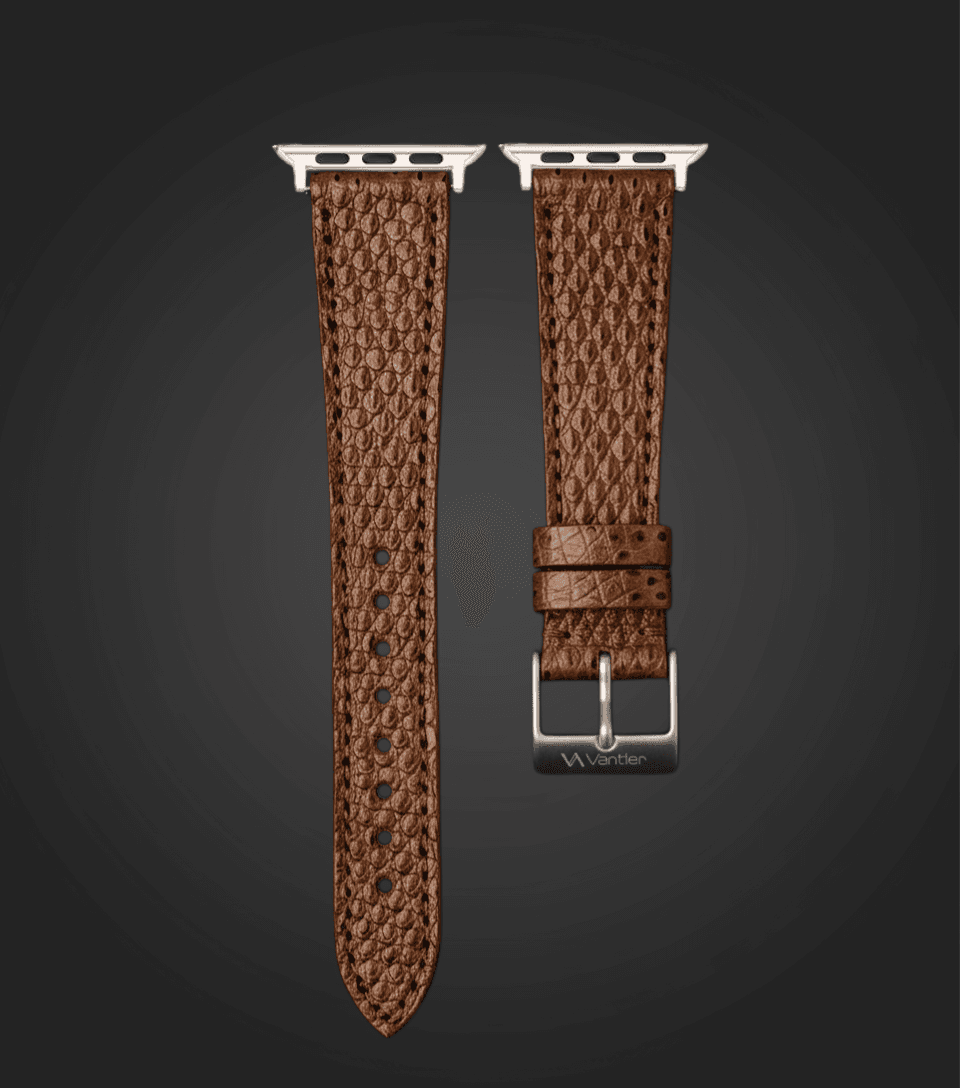
Tiju Lizard — Apple Watch
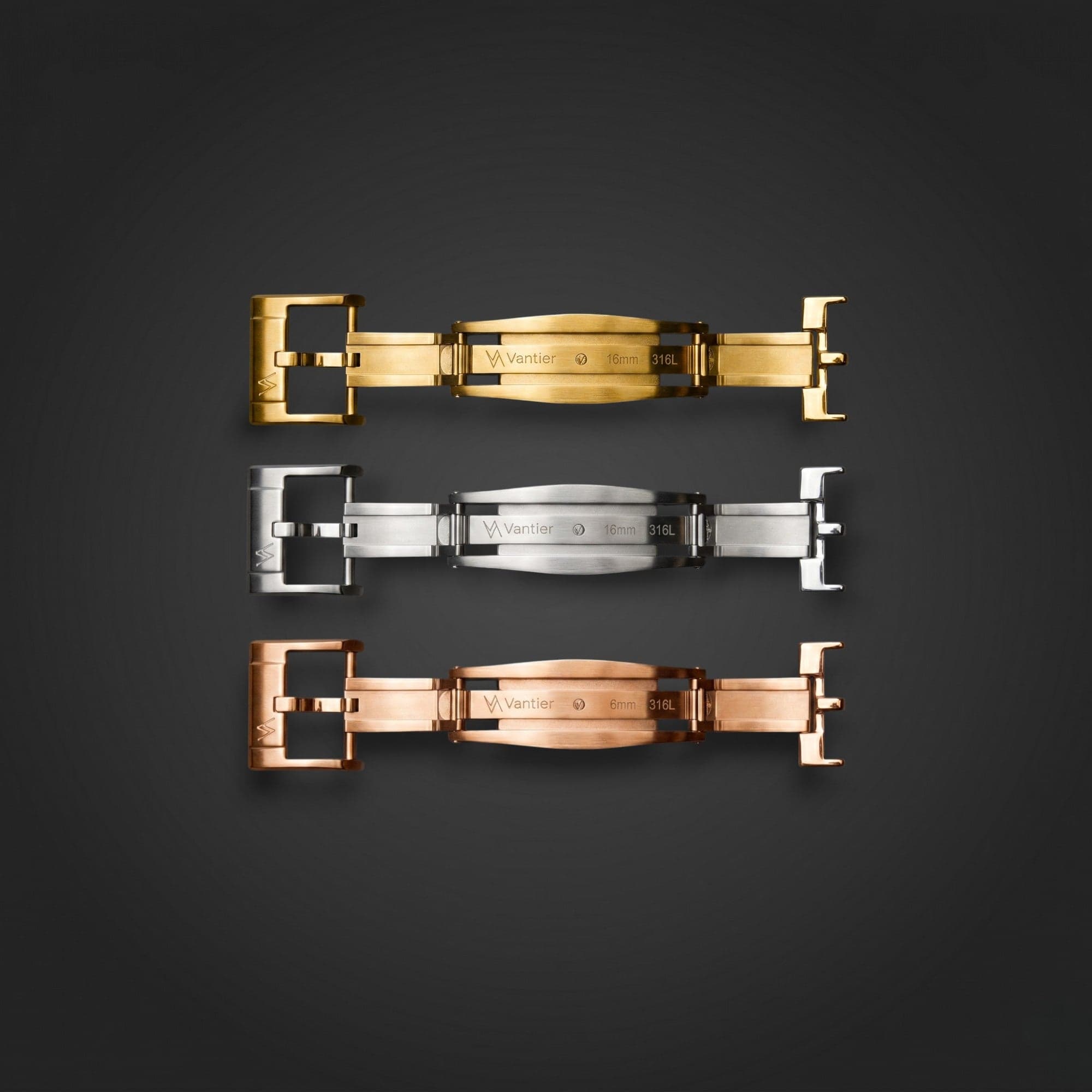
Vantier Spring Deployant Clasp – 316L Stainless Steel
 -40%
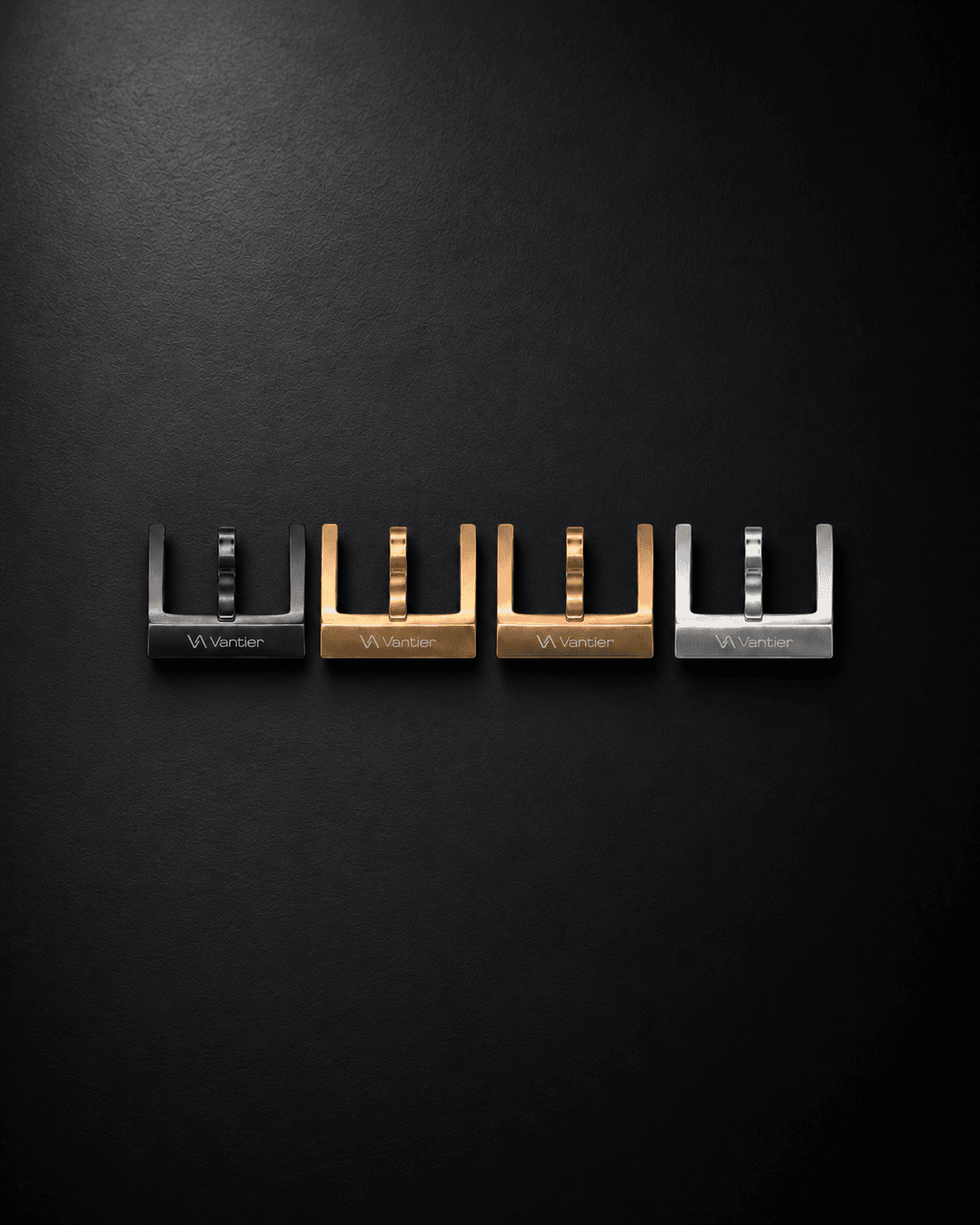 -25%
Vantier Premium 316L Stainless Steel Watch Buckle – Brushed Finish
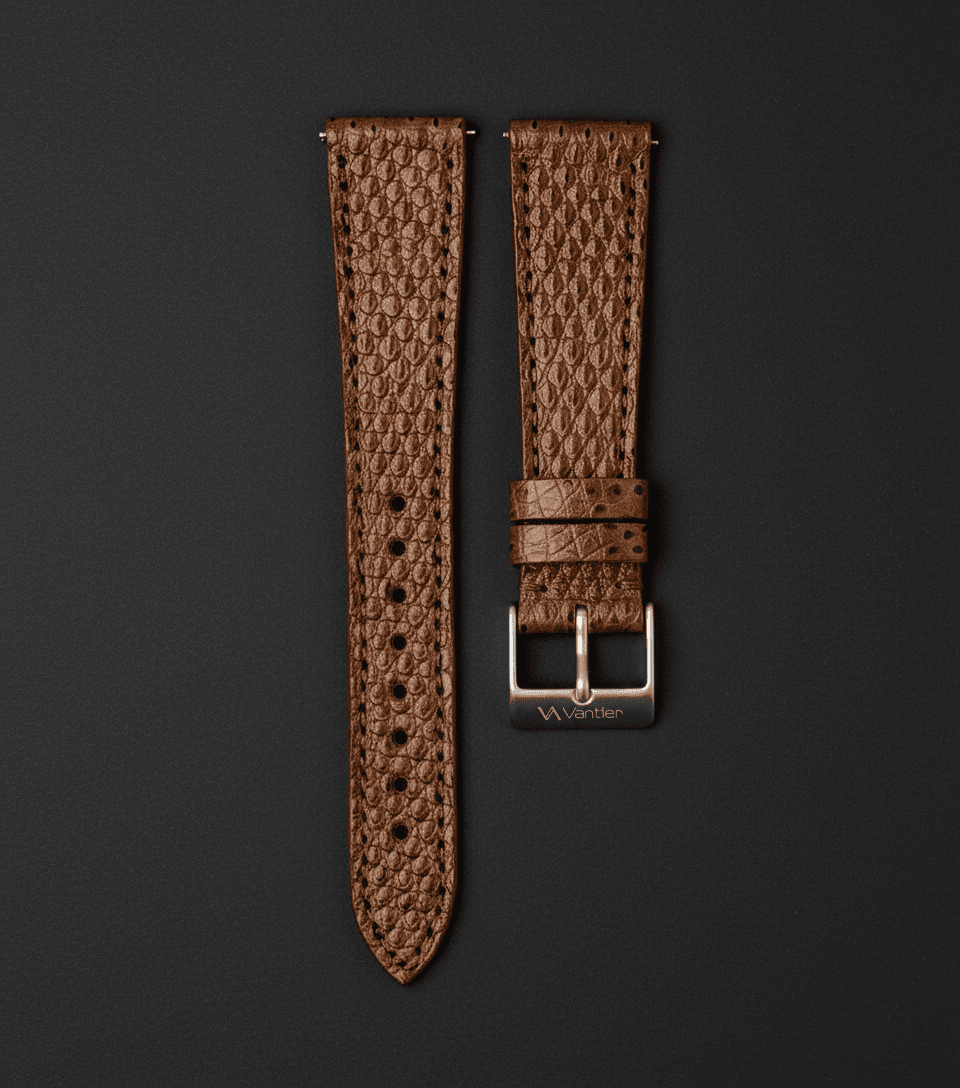 -15%
Tiju Lizard
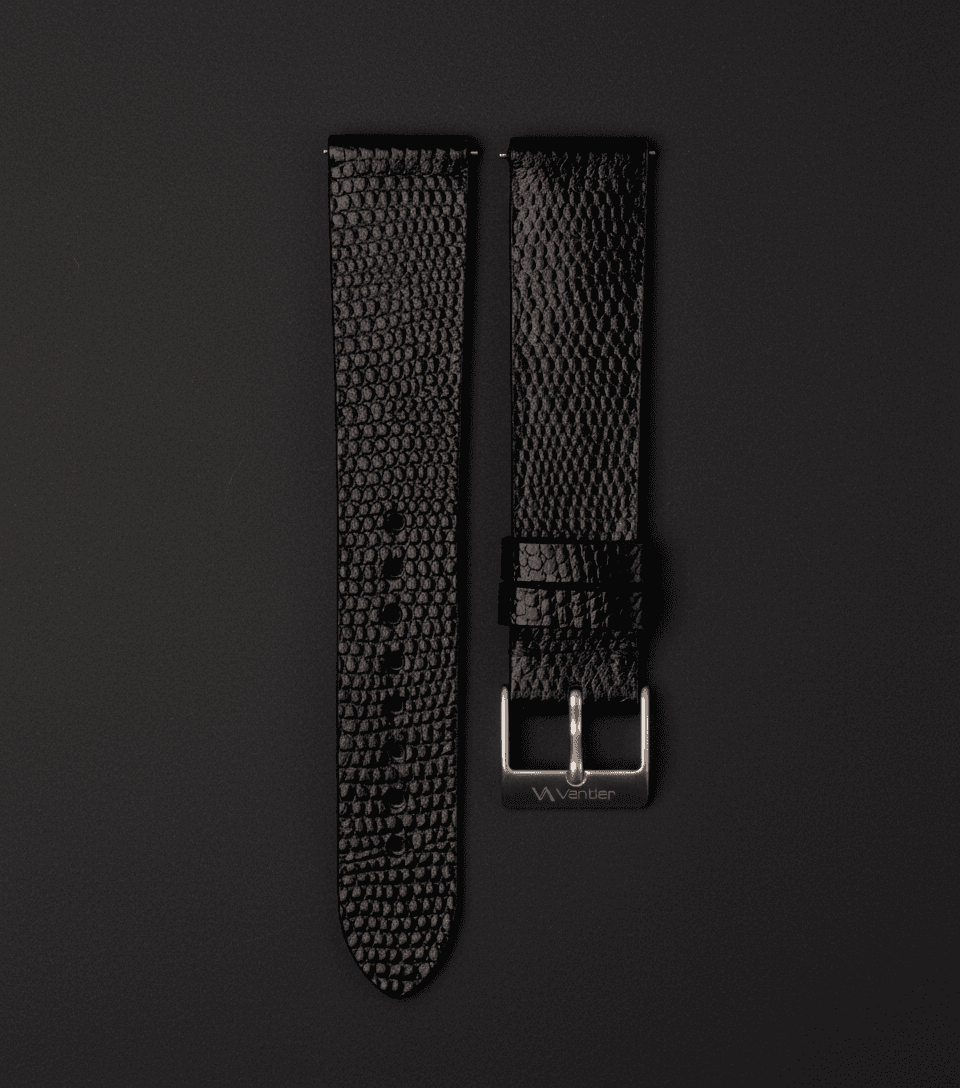 -15%
Umber Pebble Lizard
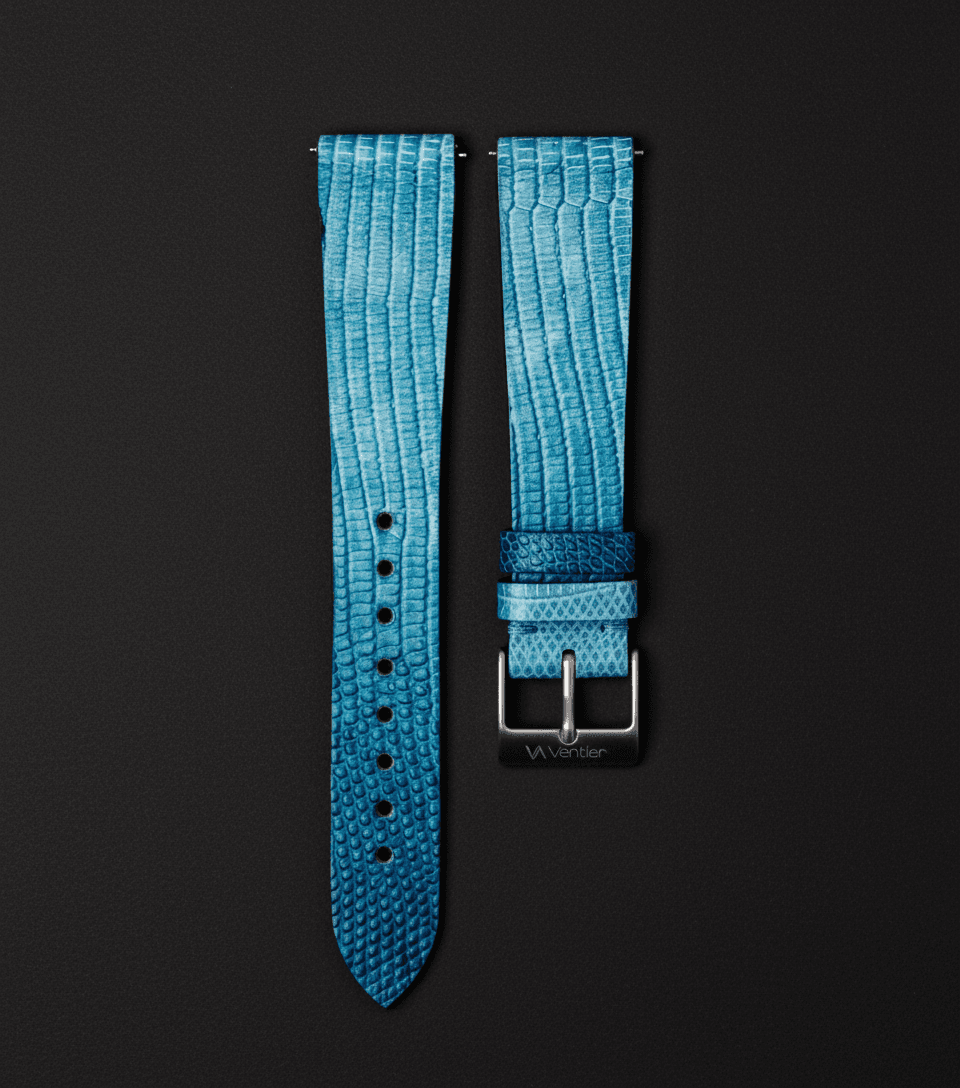 -15%
Azure Gradient Lizard
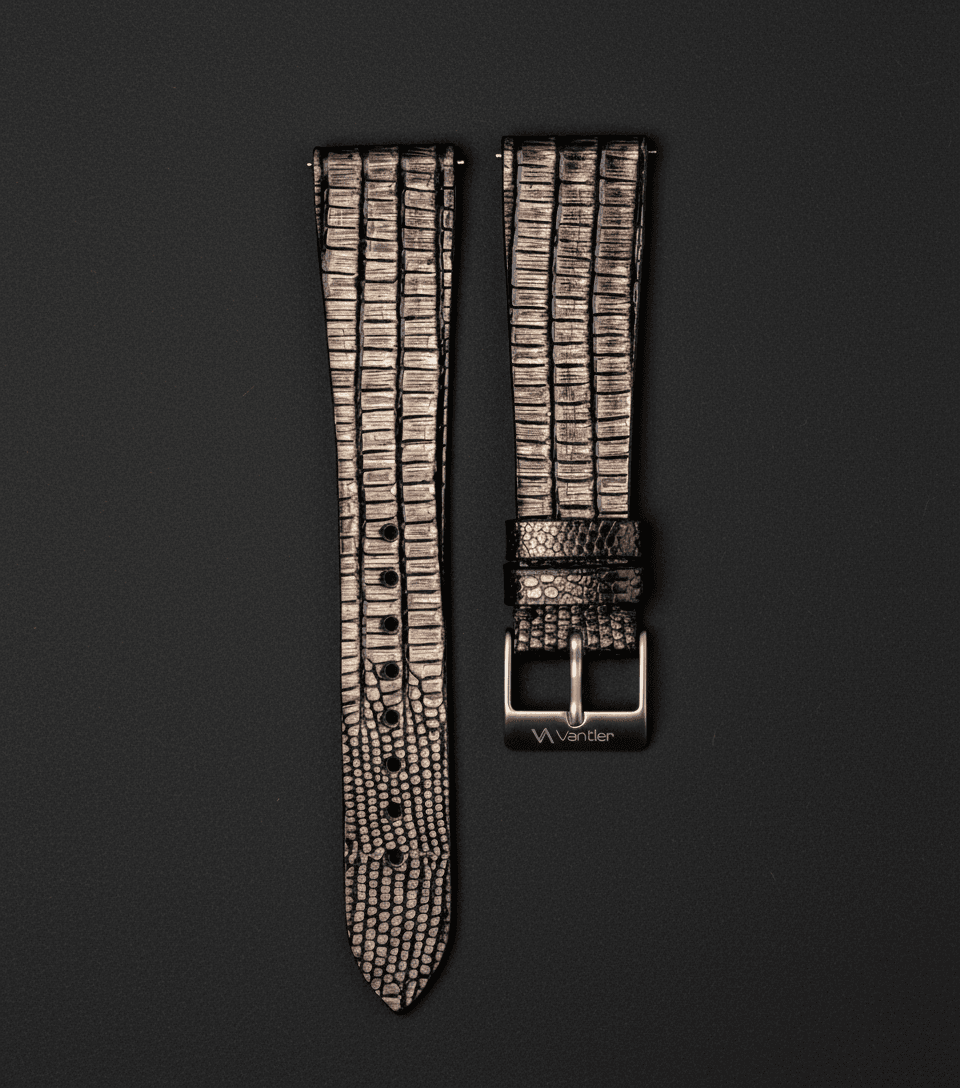 -15%